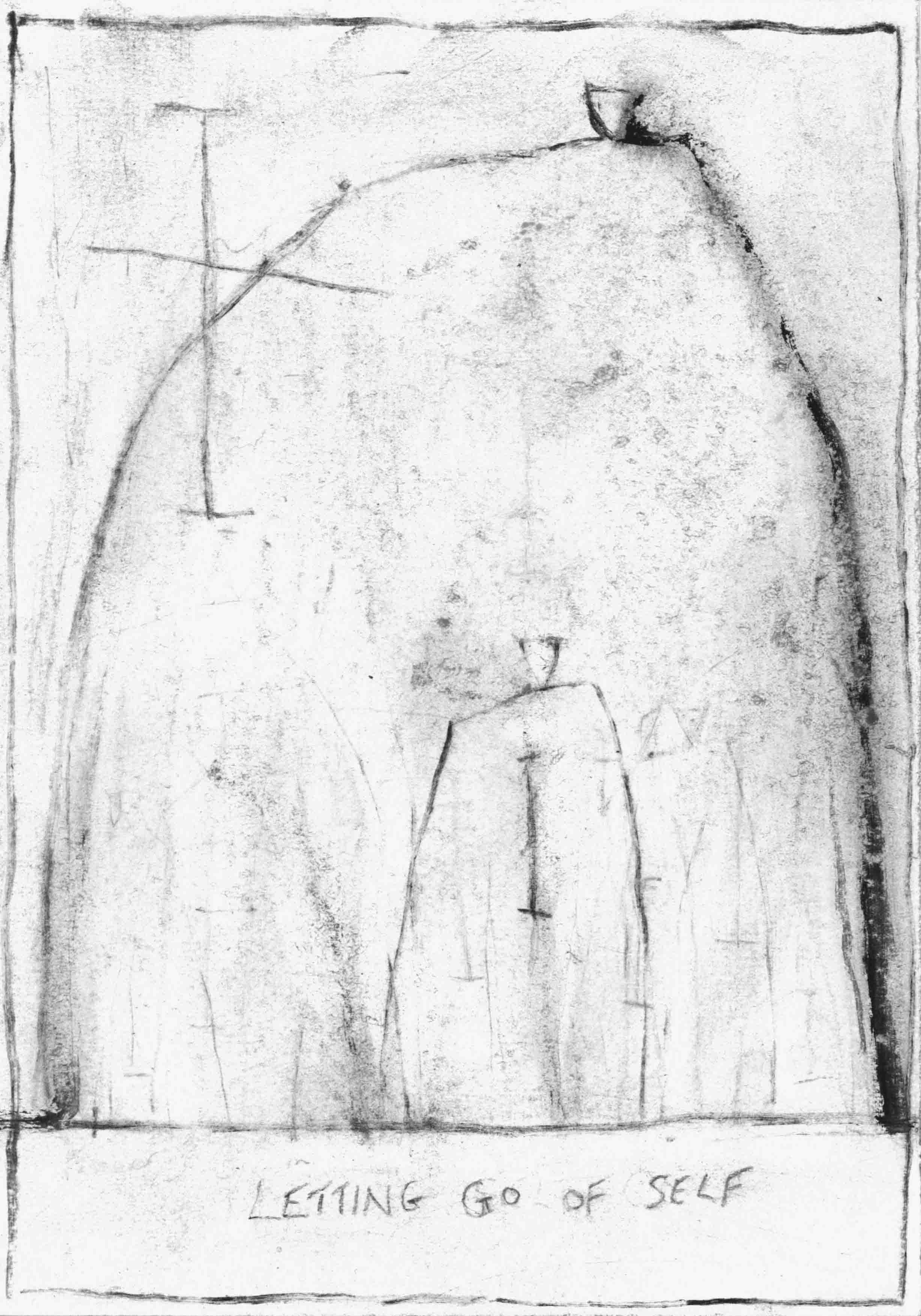
Letting go of self
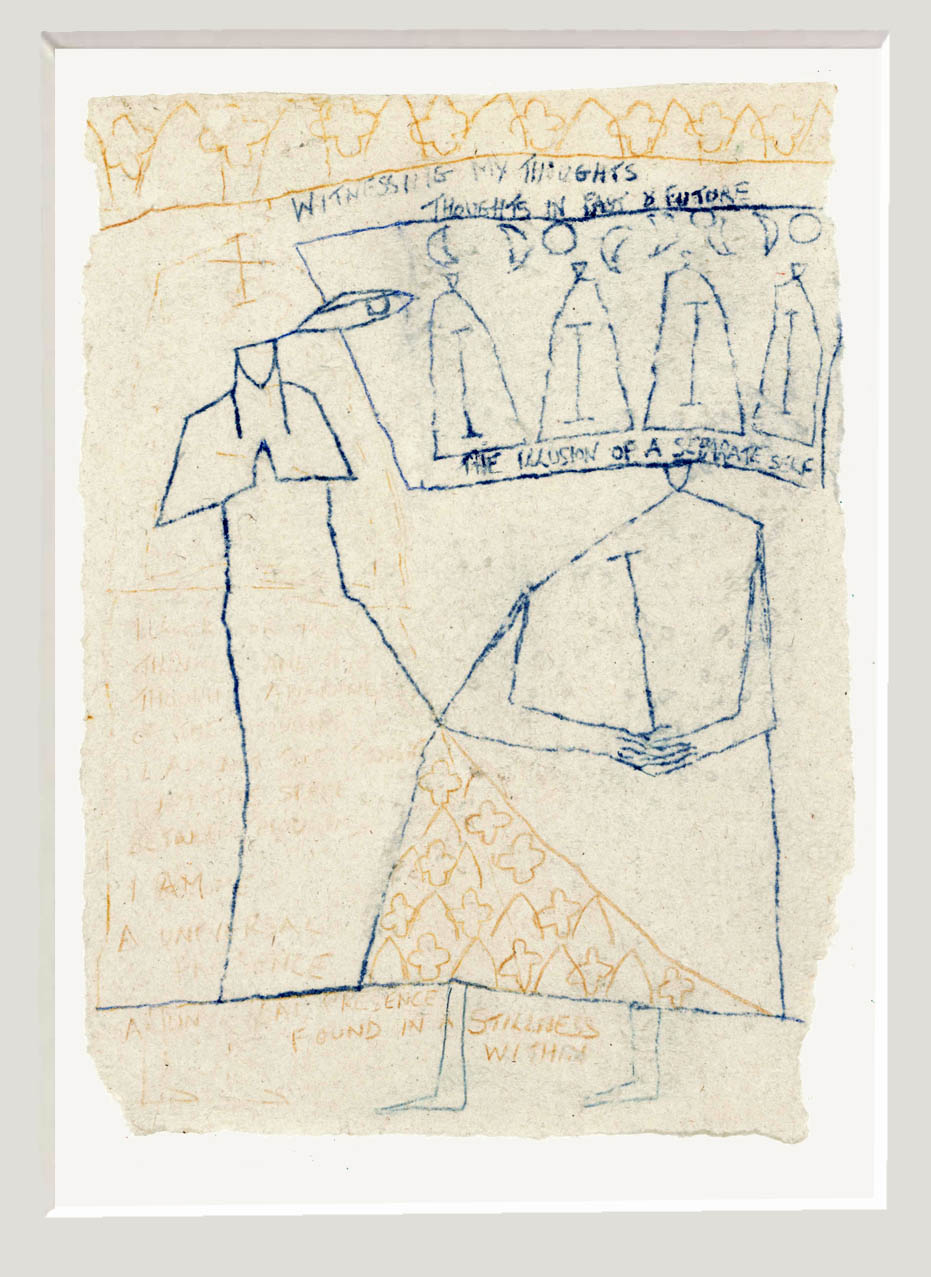
Witnessing my thoughts
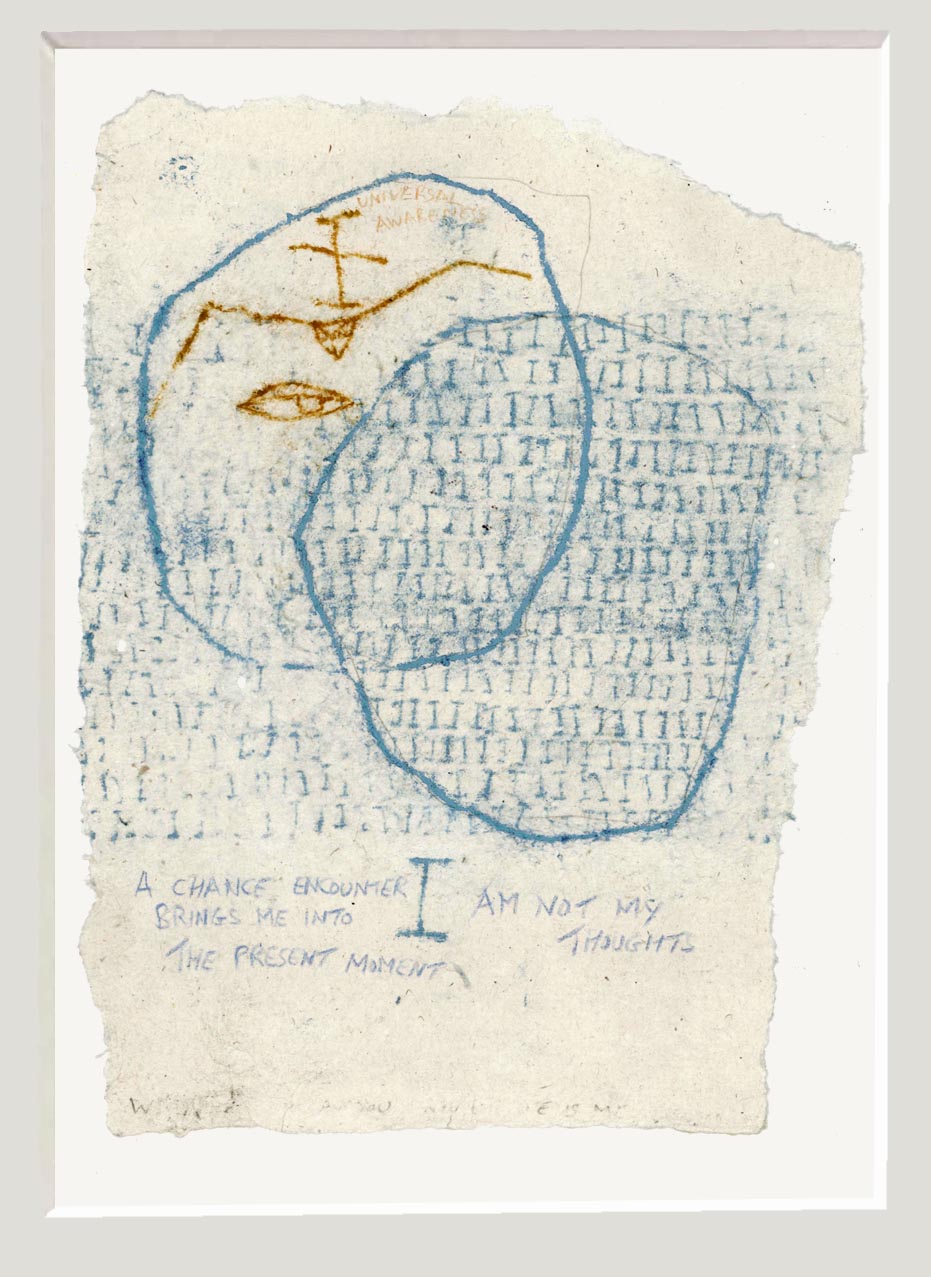
I am not my thoughts
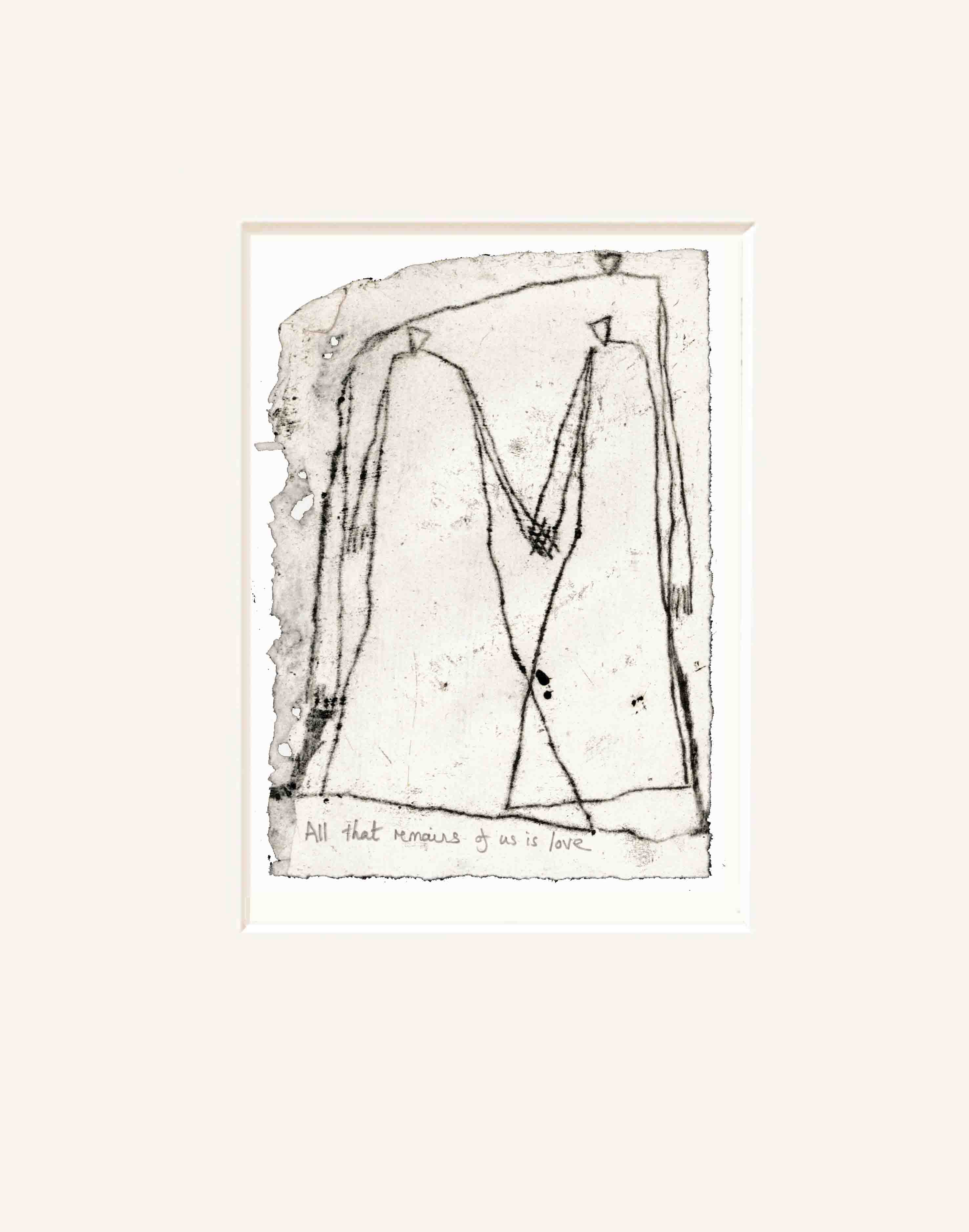
All that remains of us is love
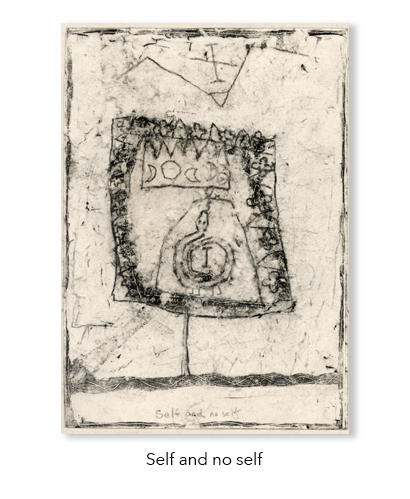
An owl brought me no self
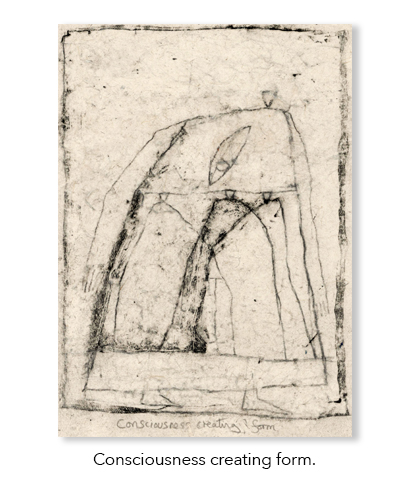
Conciousness creating form
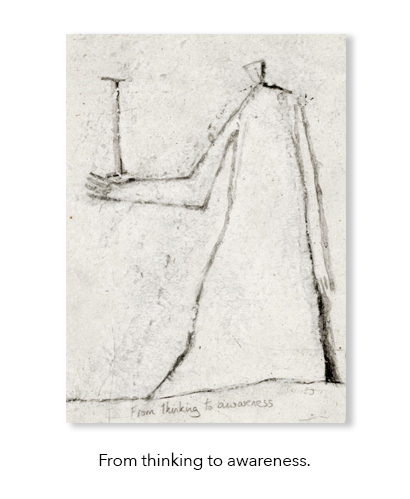
From thinking to awareness
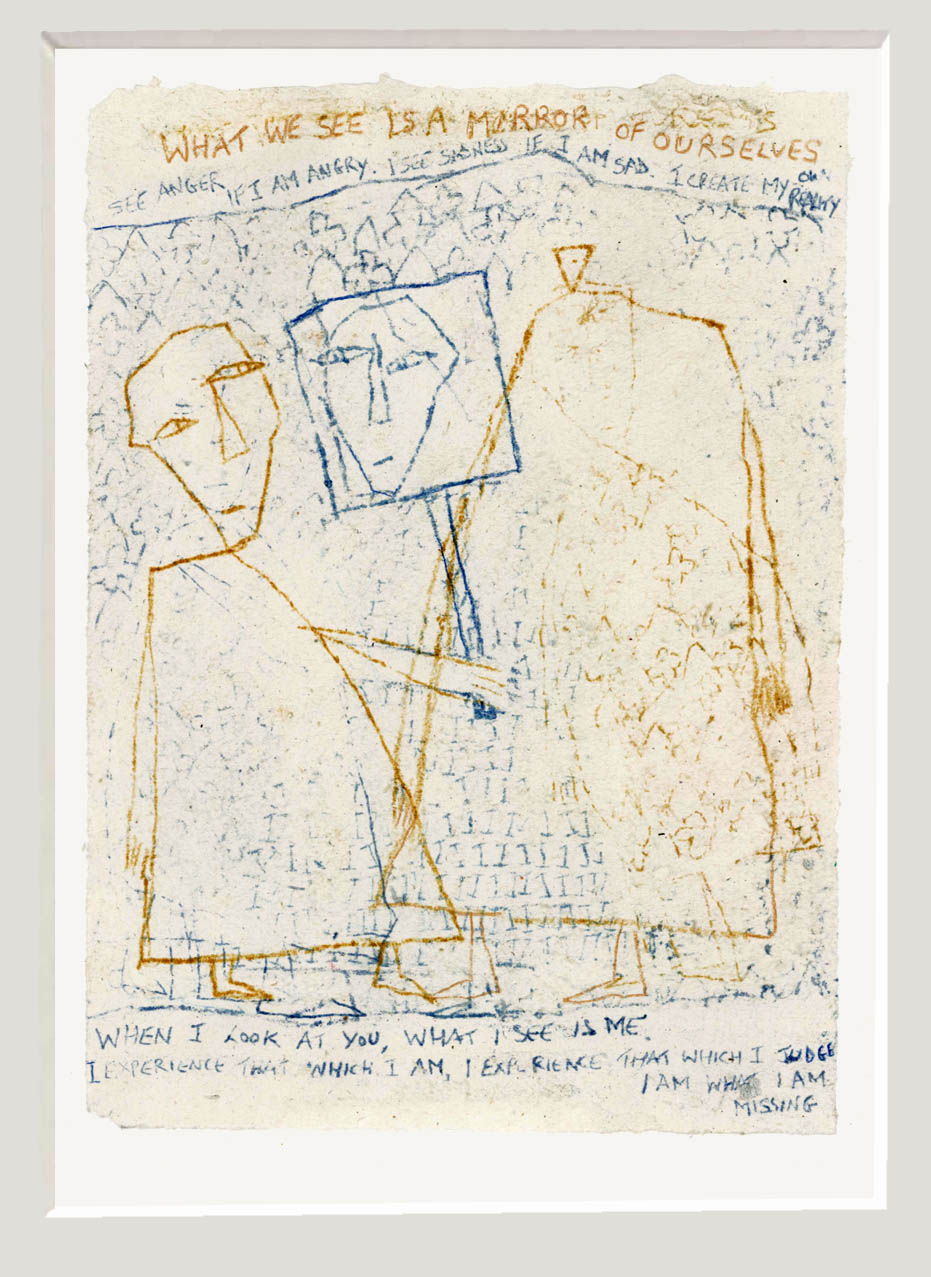
When I look at you, what I see is me.
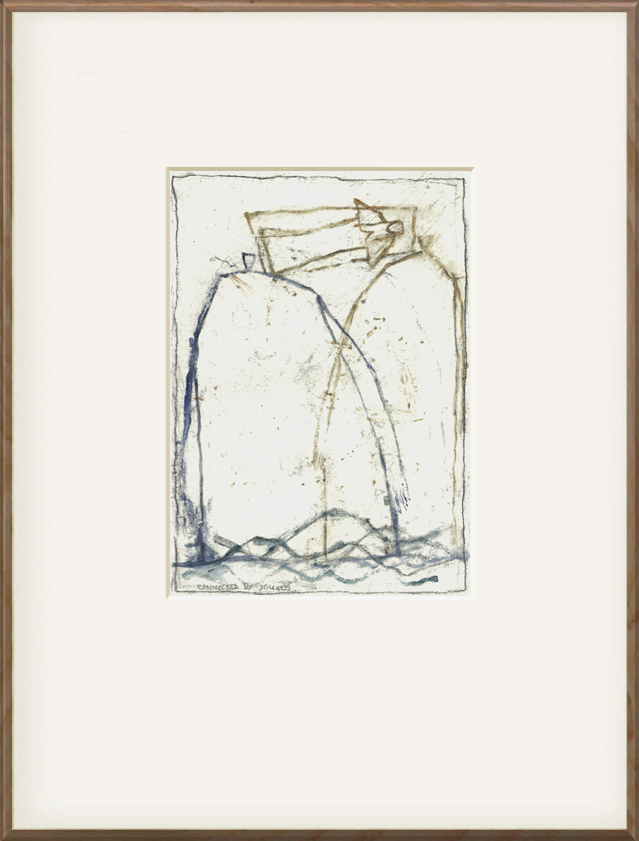
Connected by stillness
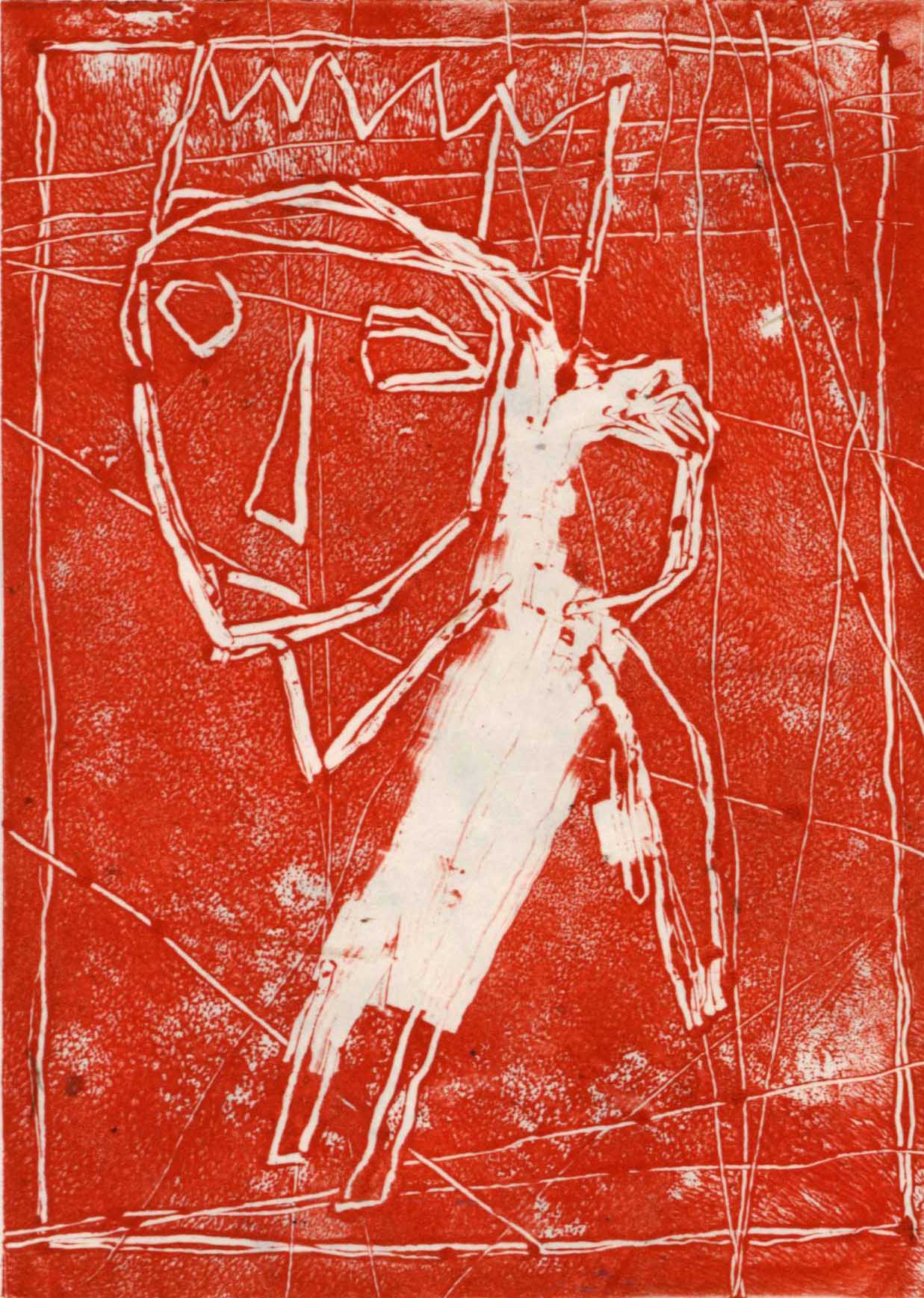
I create my story
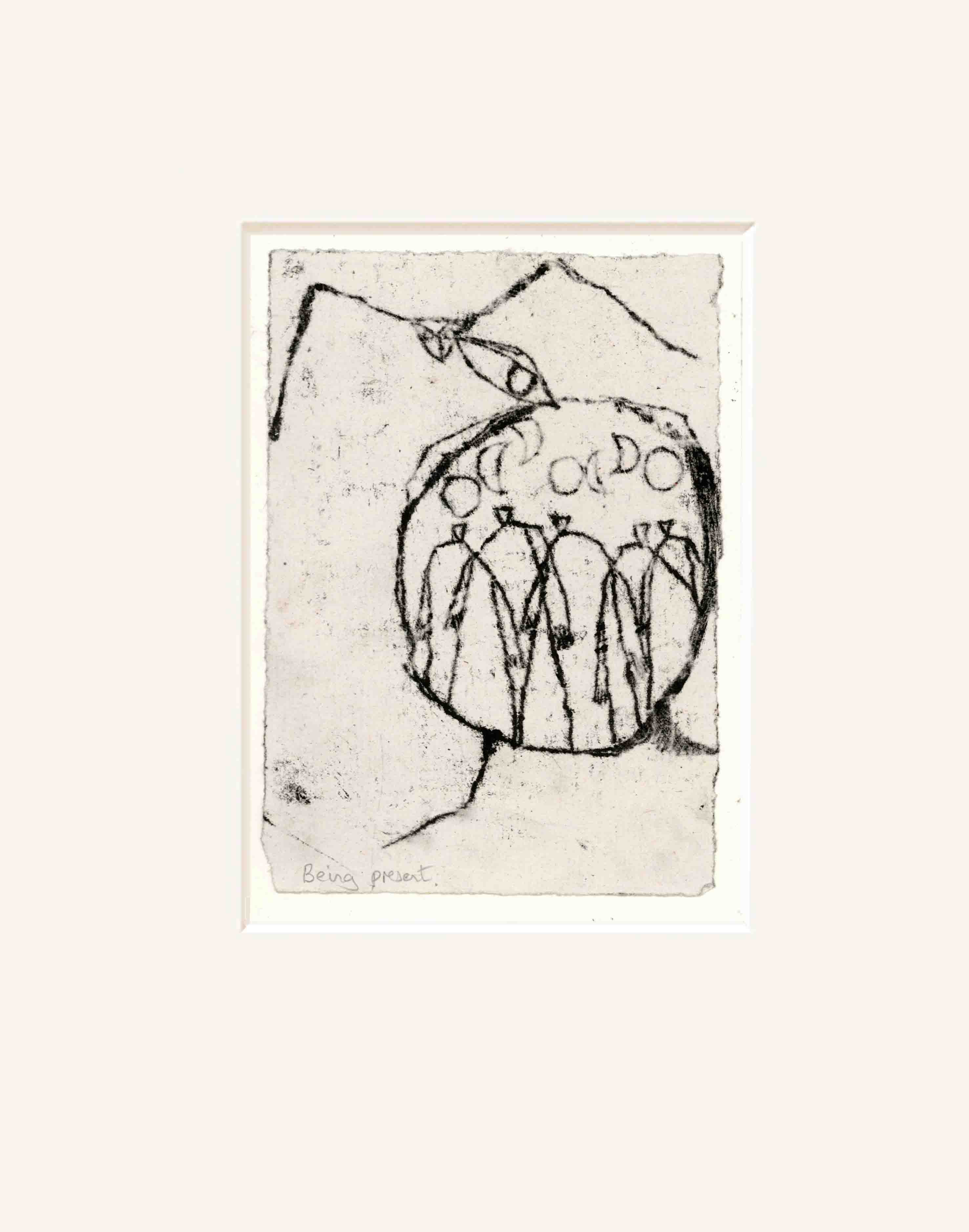
Being present
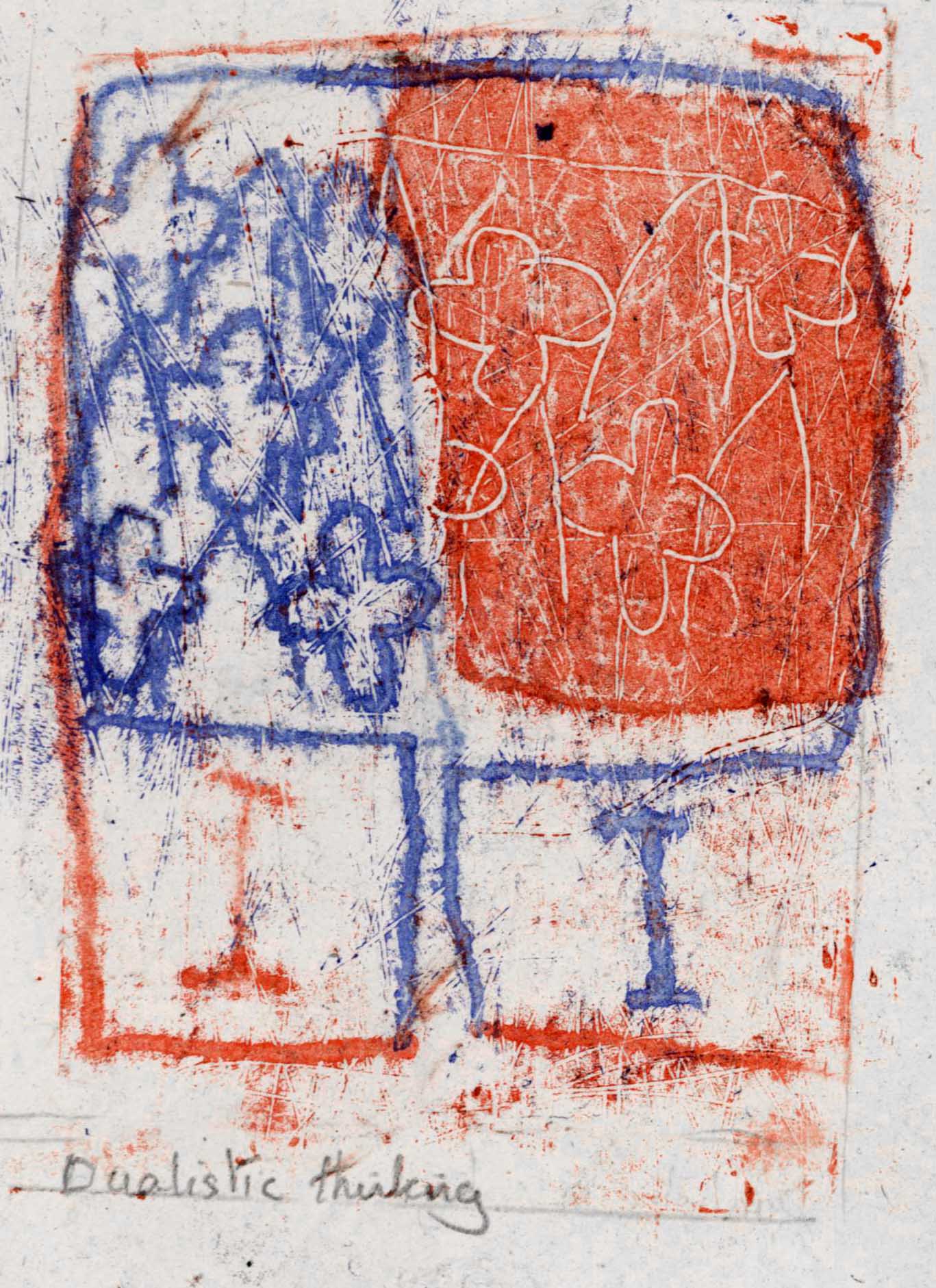
Dualistic thinking
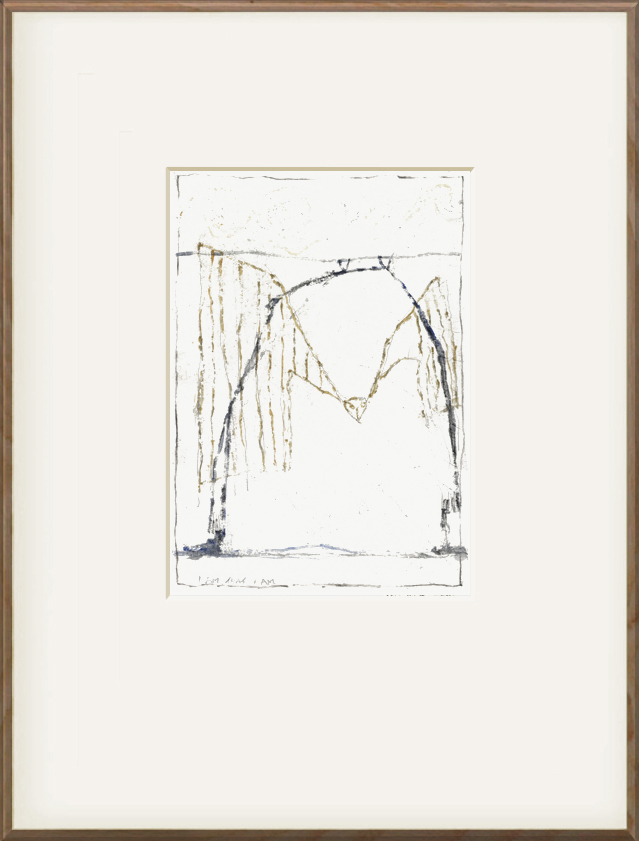
I am that I am
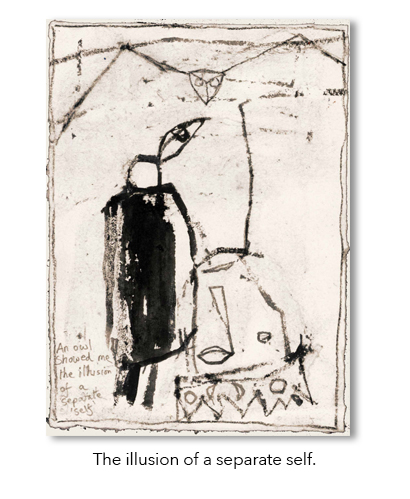
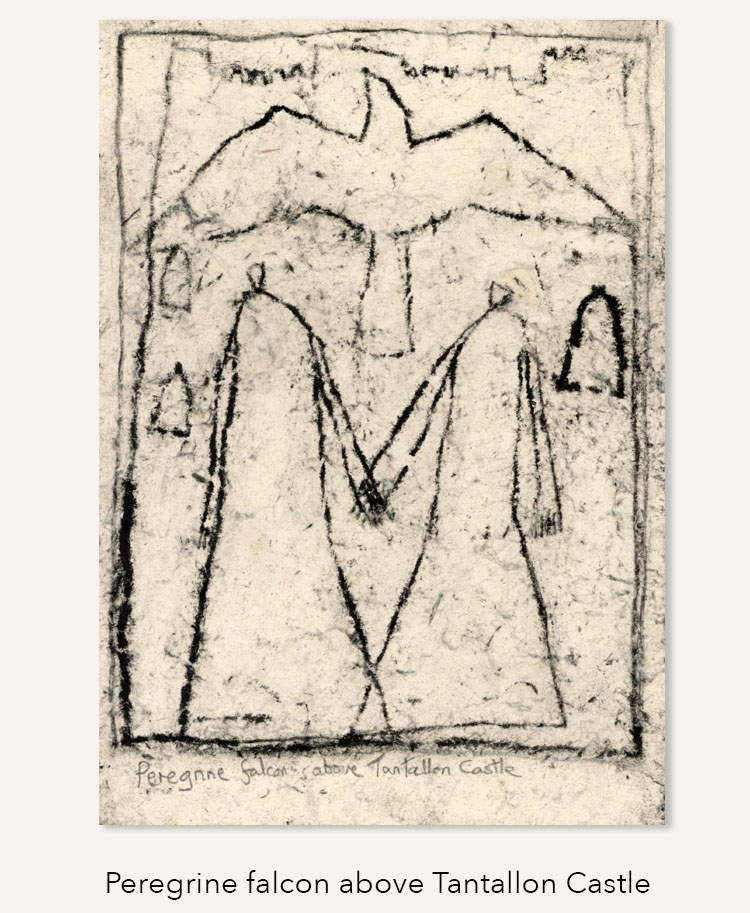
When an owl hovered above me, time and thoughts stood still. In that magical moment, I realised my existence is dependent and connected to everything that has ever happened and is. ......more
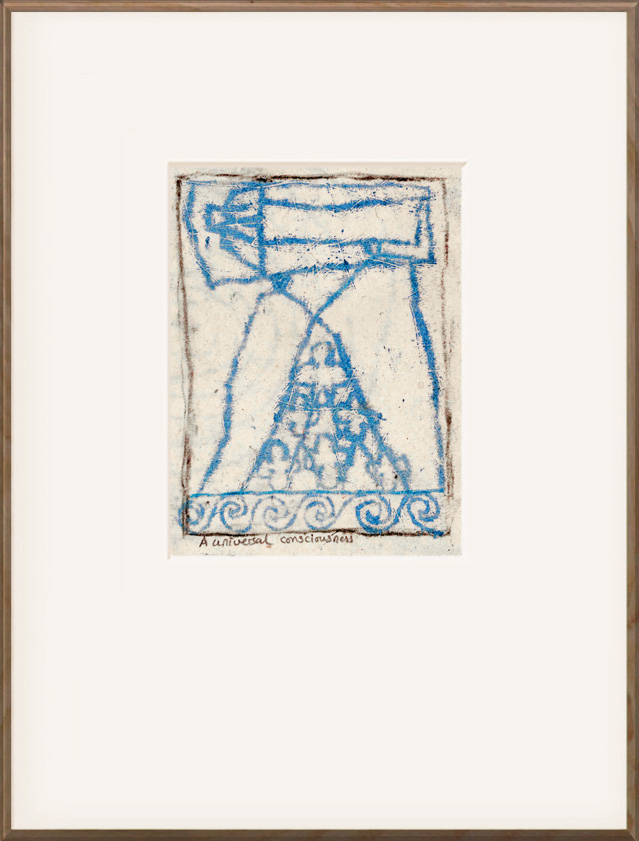
A universal consciousness
A universal consciousness
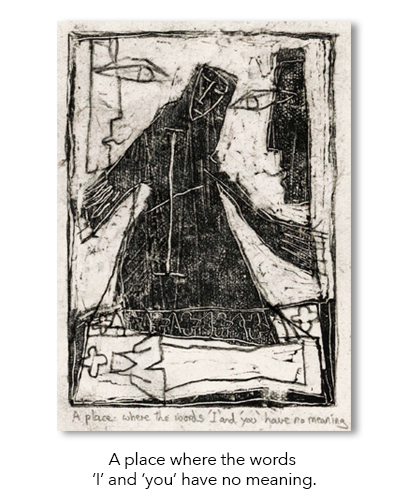
I don't think the Buddha ever said there was no 'self'. However, in Buddhism and many religions there is the concept of oneness and universal consciousness. Finding stillness and letting thoughts go takes me to this place.
My thoughts give me an identity, a library of experiences and knowledge to keep me alive. But in these moments of stillness, who is the witness of my thoughts? In the painting thoughts of past and future, with which I identify, circle in my mind. In the centre, like in a wheel, there is stillness. There is a different awareness present. It is the consciousness that is simply 'I am'. The conscious state that is required for me to be "I am" is the same for you as it is for me. It is a universal awareness of itself. Perhaps it is the God in all of us. ......more
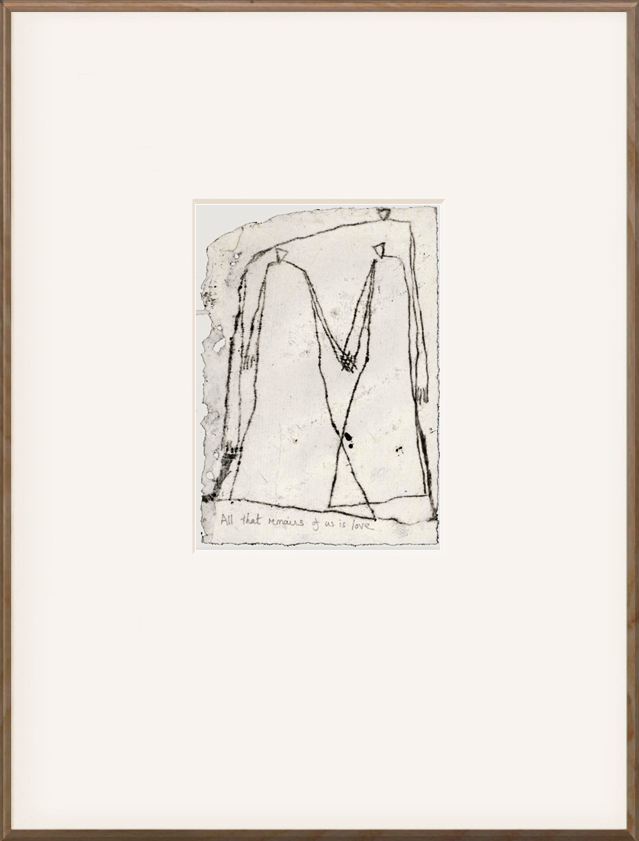
All that remains of us is love
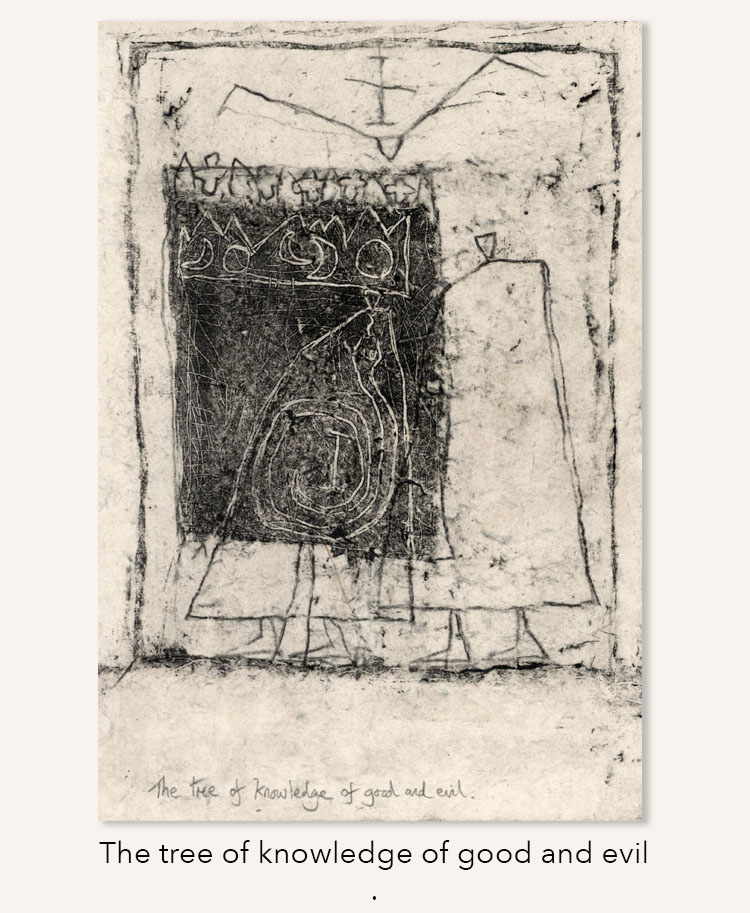
In this painting I was thinking about the freedom of 'no self' as opposed to the self awareness given to us by the serpent in the Garden of Eden. The owl has come to represent this freedom for me, because when witnessed in nature, I find all thoughts stop and I am brought fully into the present moment. ......more
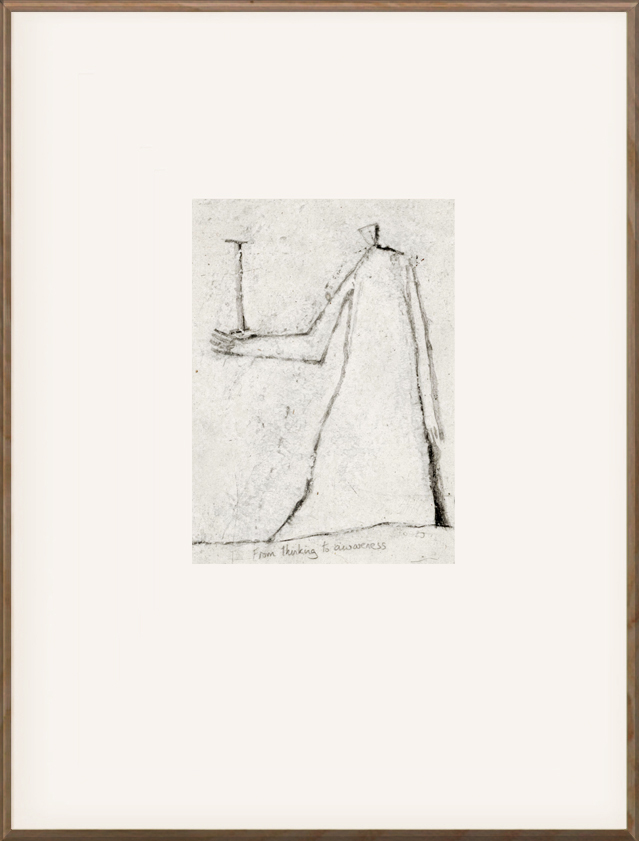
From thinking to awareness
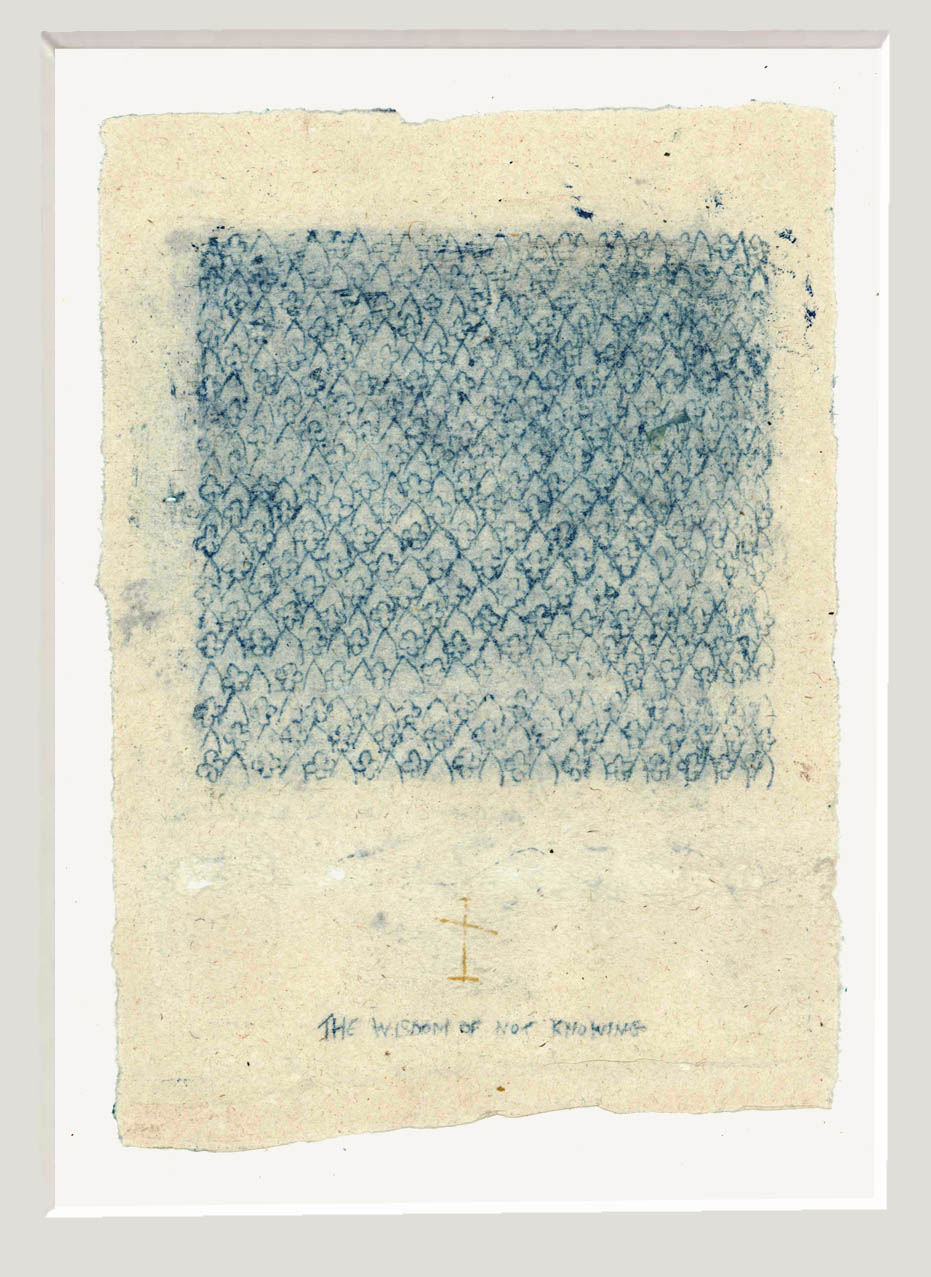
The spiral illustrates my spiritual journey, arriving in the centre where there is nothing. There is no deity, no life changing epiphany or profound experience. It is “empty” of solid, separate, and permanent existence. It is empty of 'enlightenment', as enlightenment has no witness. Only enlightenment is aware of enlightenment. So I return on the same path, to the same ever changing world that I had left, doing what I did before, but also having changed. My happiness is now not found in achieving external milestones, but in the wisdom of not knowing. In my drawings I keep the process very fluid. As ideas come, I continually add and subtract them to the drawing. There is never any preconceived conclusion, there is just a moment when the drawing feels finished. There is also no 'knowing', just an awareness that the image resonates deep within me. ......more
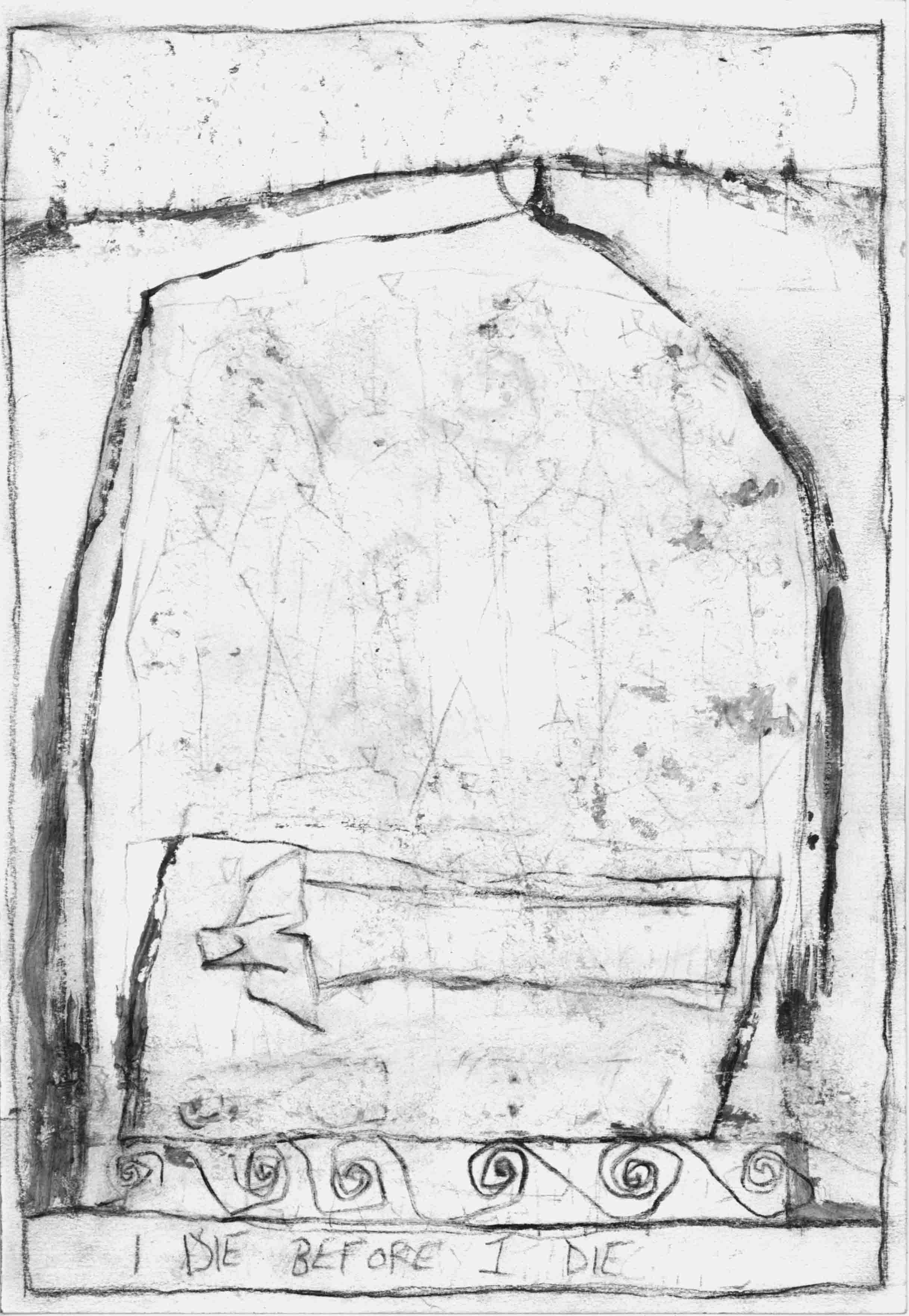
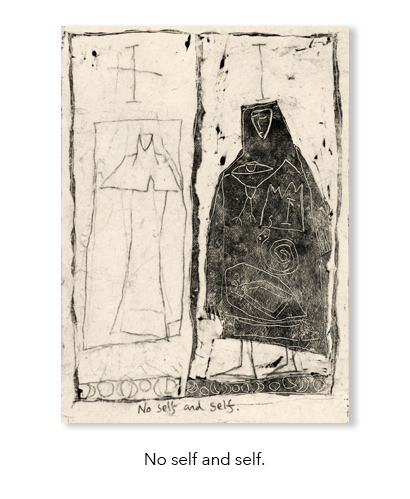
I think to die before I die is to drop ideas and concepts of a separate self and to become aware of that which we obscure with our delusions. To realize this true self before my body dies helps me consider a more compassionate approach to others. The body, feeling, memories, thoughts and consciousness remain but are no longer seen as 'self' or belonging to 'self'. The painting uses the patterns from the side of a tomb to represent this 'no self' state which unites us. When using these patterns as a meditation mantra, I sense feelings of connection with all things. We are all inter dependent upon one another, we are all connected by the past actions of our ancestors and we are all connected in the future reality of impermanence. ......more
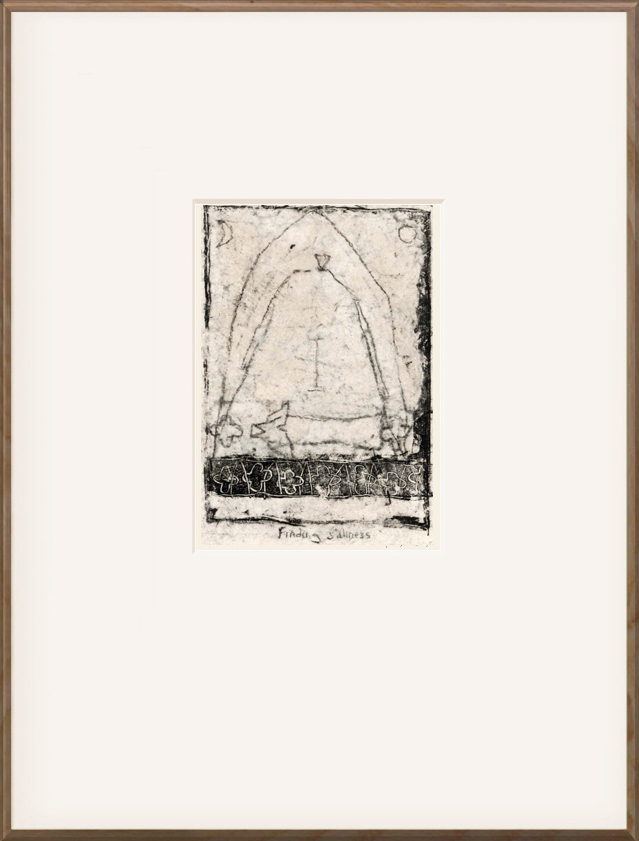
Finding stillness
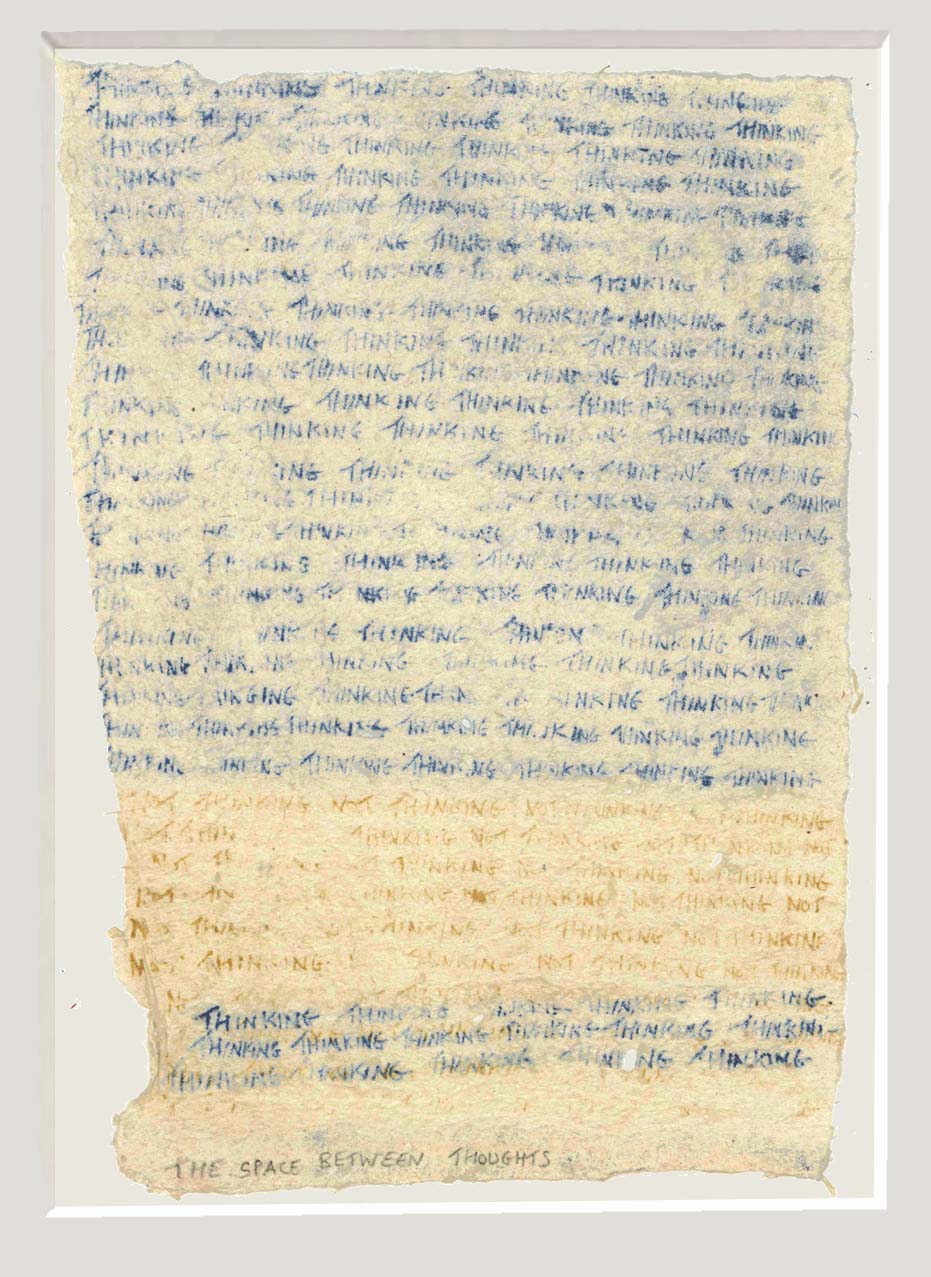
As I think about the patterns carved on a tomb, I start to draw and acknowledge the stillness deep within me. My thoughts are represented by busy and confused figures, one set with a sun above and the other a moon. I like the idea of the thoughts being of past or future, never existing in the present moment. The separate sets of figures also raise ideas about duality, where my internal dialogue obsesses with confrontation.
The space between my thoughts is a consciousness beyond thought. I find this space by meditating upon the tomb patterns and the stillness I share with the tomb. It is a place of just being, absent of identification or separation. The I or self is crossed out, and beyond that is an awareness that is only aware of itself.
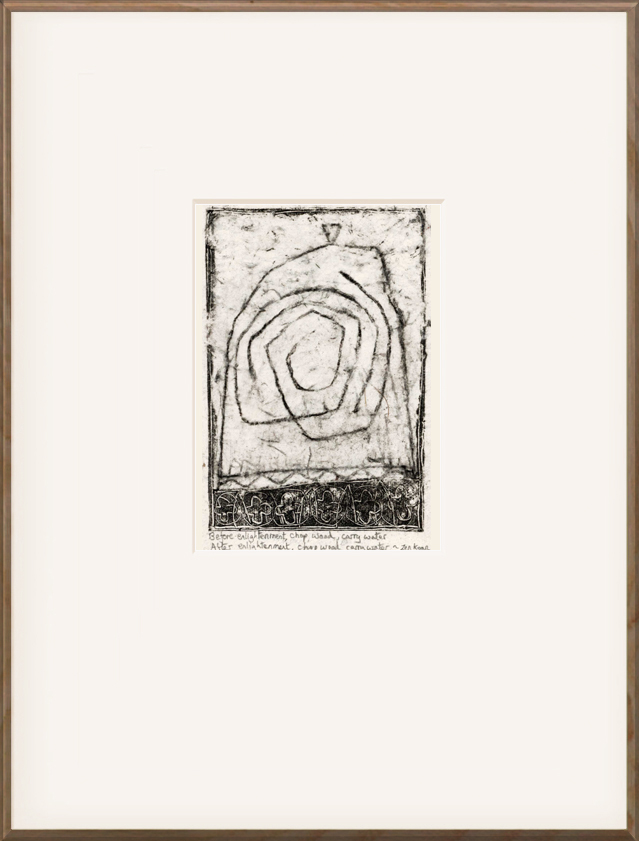
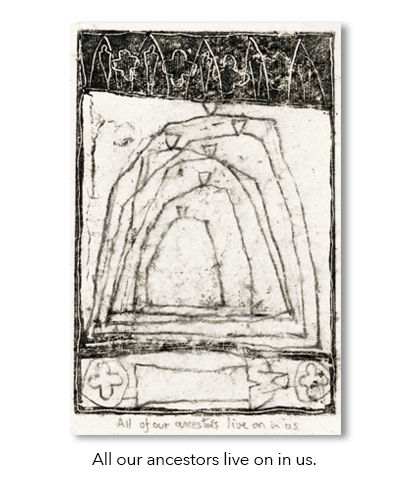
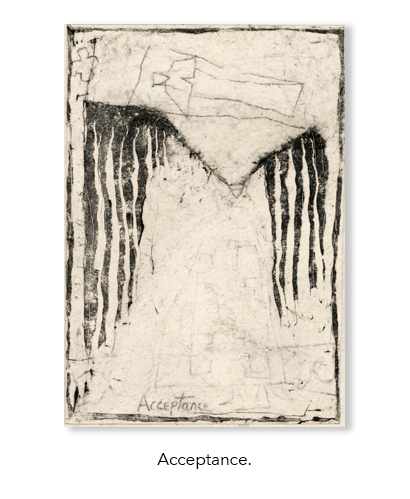
In my life I am aware of patterns of behaviour that pass from generation to generation. These patterns can be destructive but I believe awareness and acceptance is the means to effect positive change. ......more
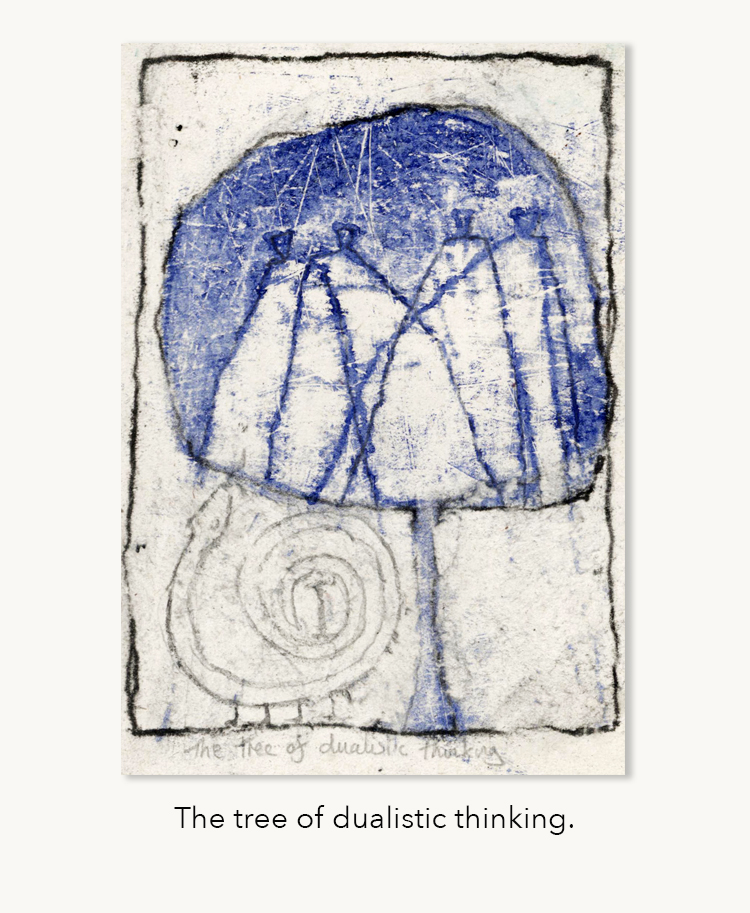
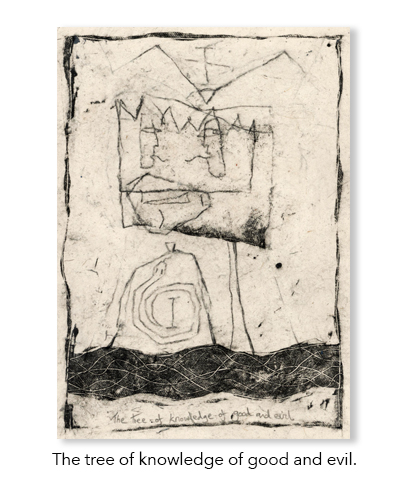
The drawing shows a tree containing figures. They represent thoughts of comparison, differentiation and separation. This is the dualistic thinking in my mind. The tree is a reference to The Tree of Knowledge of Good and Evil in the garden of Eden. I like the interpretation that this story is about the introduction of dualistic thinking to Adam and Eve. If we are born innocent, then perhaps our society and culture of today is the new version of the serpent, where we are encouraged to believe that the 'self' is all important and by being better, special or materialistically richer than others, we will achieve happiness. ......more
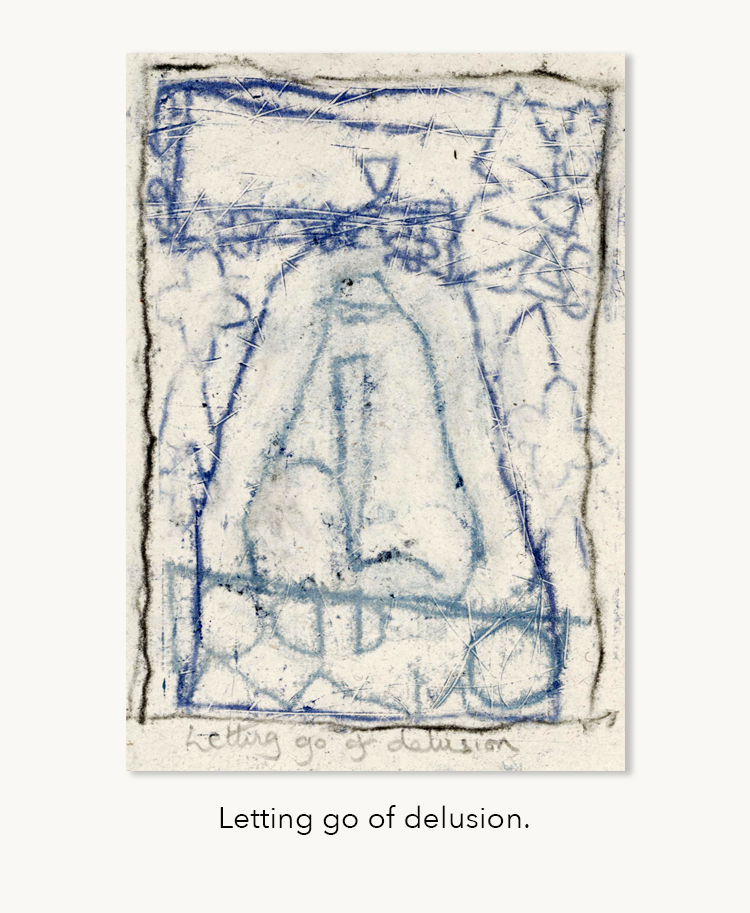
I've represented thoughts as the phases of the moon. They are moments in time that appear and then fade away, leaving stillness. Beyond the stillness is 'I am'. It is my true self as infinite consciousness. ......more
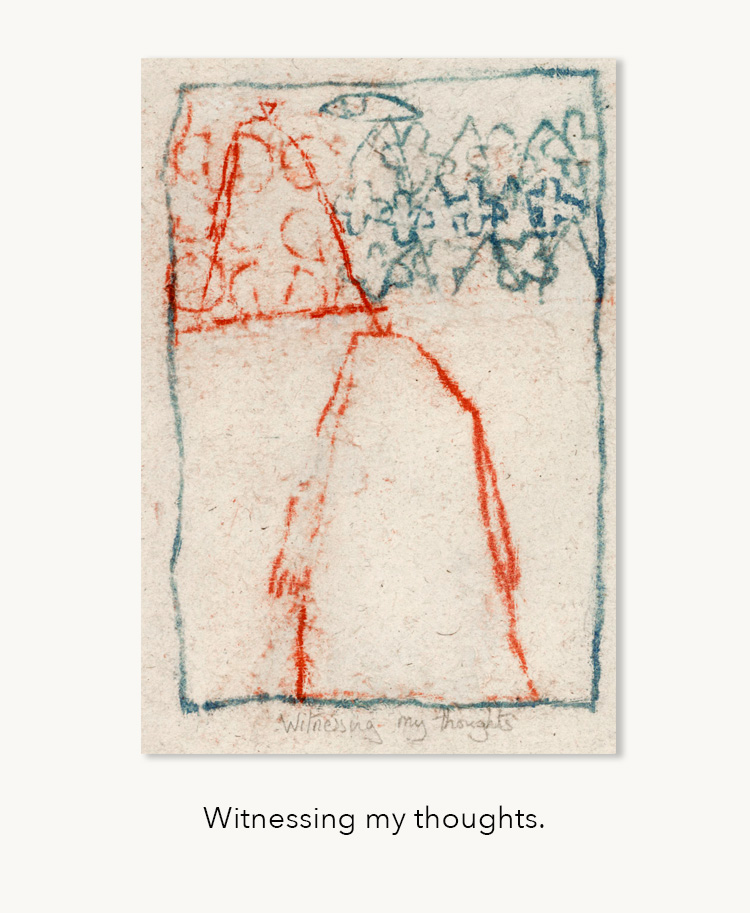
In the stillness of just sitting, I glimpse an awareness between my thoughts. The drawing depicts my thoughts as figures, representing the world of form. I move from my thoughts, through the stillness of the tomb, to an awareness without thought. A place of formless and universal stillness.
When Moses asked God for his name, God said "I am that I am". Without thoughts of my name, gender, culture or past, I become simply 'I am'. I believe this state of awareness or consciousness, without thought, is what we refer to as God. It is being totally present, providing an awareness beyond the world of form. It is a place of consciousness, from which form arises.
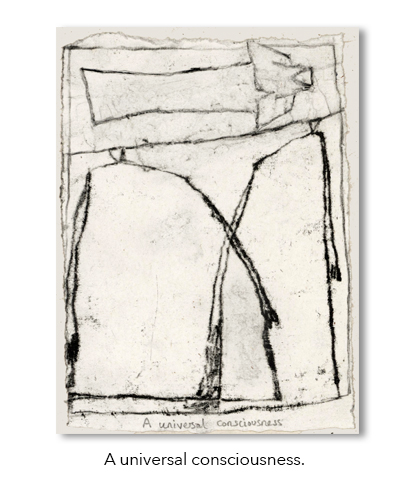
The process of quietening my mind brings awareness of my thoughts. I cannot grasp or define this awareness as to do so transfers it into a thought. But with stillness, I let the awareness experience itself.
The drawing depicts my mind becoming full of stillness and without thoughts I become empty of separation. ......more
I think to die before I die is to drop ideas and concepts of a separate self and to become aware of that which we obscure with our delusions. To realize this true self before our bodies die. The body, feeling, memories, thoughts and consciousness remain but are no longer seen as 'self' or belonging to 'self'. ......more
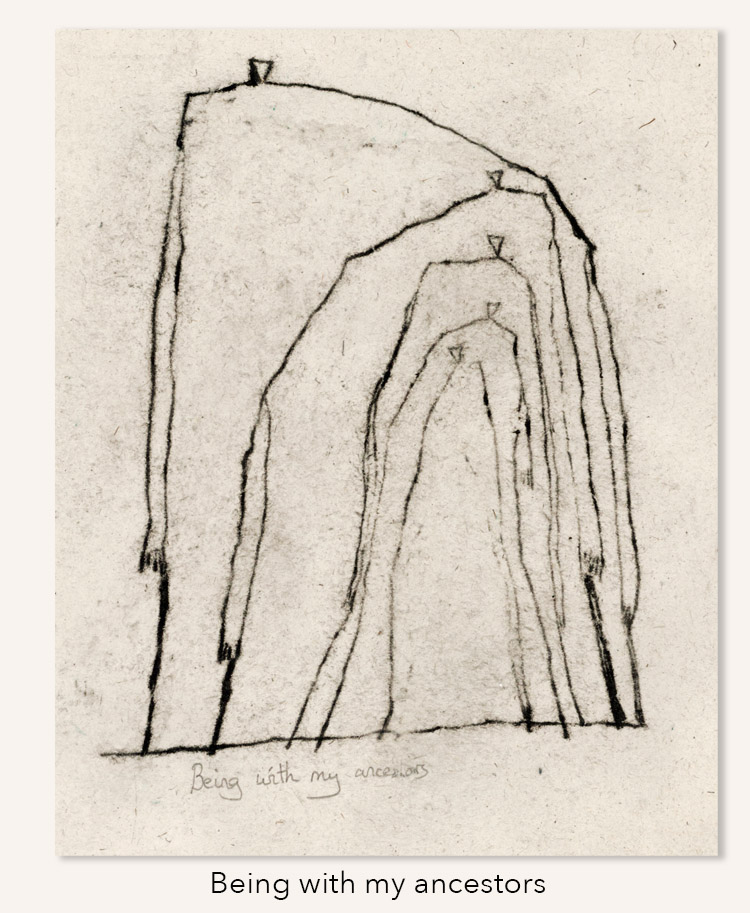
Talking to my ancestors ......more
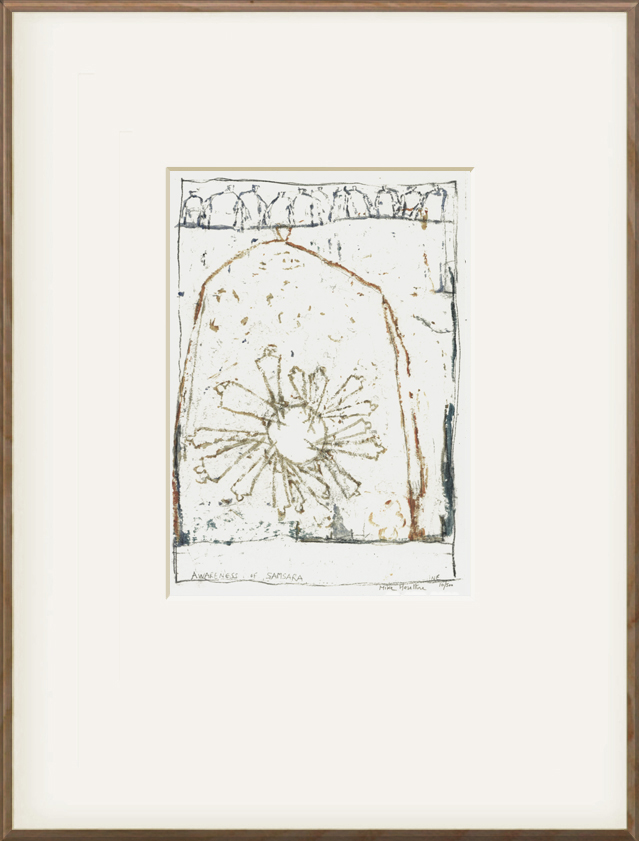
In this drawing I am witnessing the rotating wheel of death and rebirth. The figures are all our ancestors, whose actions have led to us. The figures could also represent events or influences that have effected our ancestors. Either way, all these people, events or history live on in us. We are our ancestors. In the centre of the rotating wheel, where the hub is, it is still, calm and peaceful. It is Nirvana. It is a place we can find within us and is not subject to the rotating wheel of life. It is a place of universal stillness and an awareness beyond just form. I have identified in my own life patterns of behaviour that have passed from one generation to the next. It seems finding this place of stillness and awareness, is the first step in addressing these negative patterns. ......more
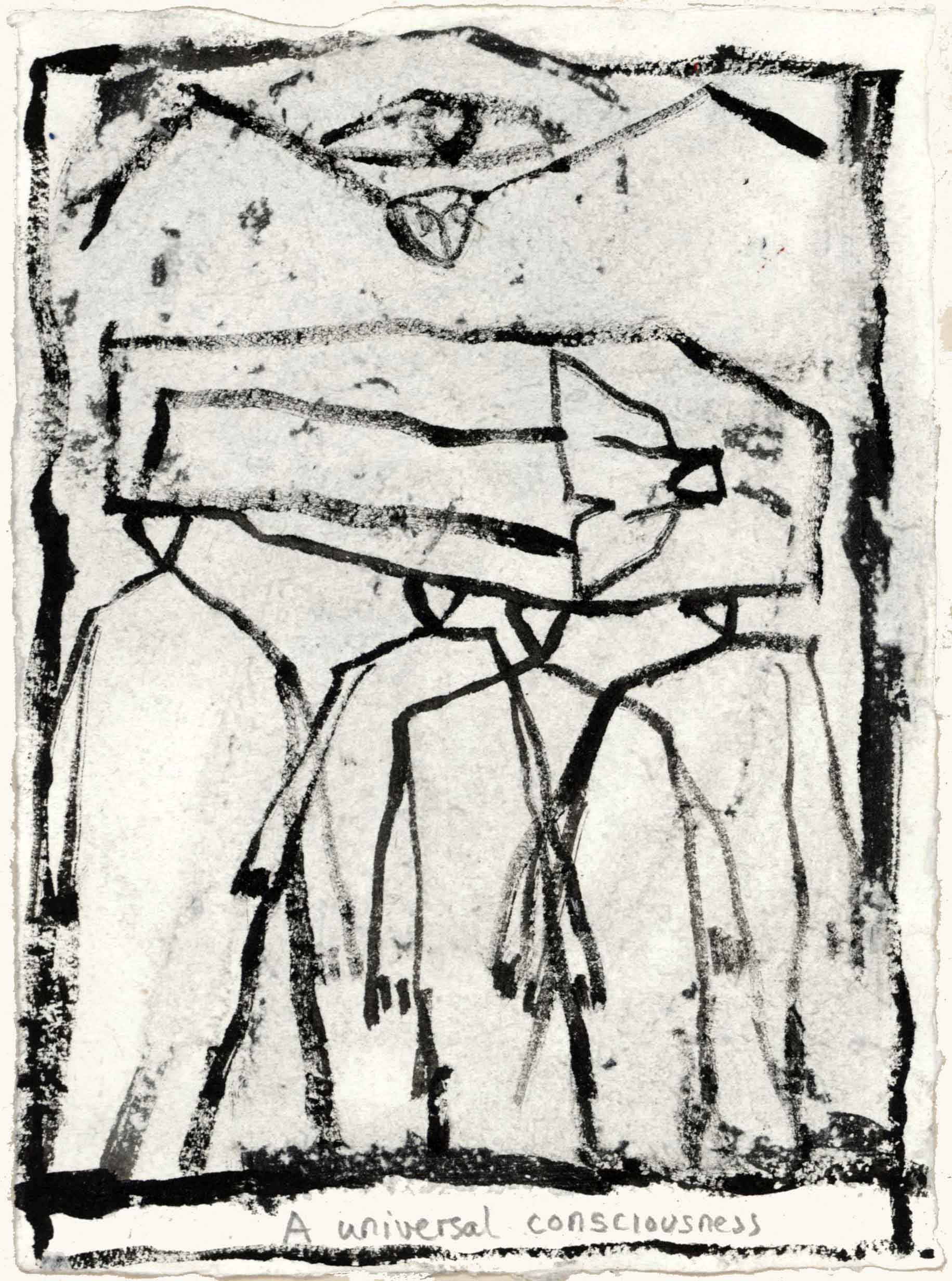
In the drawing, the two figures are connected by the symbol of stillness. A symbol I have used in many pictures, originating from a tomb in a cathedral. If I can let my thoughts quieten down, I become a stillness, without dualistic thought, that is universal. From this stillness, we are born and will return. I like the analogy that we are a wave, created by our thoughts. We briefly exist but if we look carefully, we realise there is a vast unlimited and eternal ocean which is also 'you'. The drawing also hints at the circle of life, where the figures are connected to each other and through 'stillness'. In this way, life is eternal.. ......more

The labyrinth illustrates my spiritual journey, arriving in the centre where there is nothing. There is no deity, no life changing epiphany or profound experience. It is “empty” of solid, separate, and permanent existence. So I return on the same path, to the same ever changing world that I had left, doing what I did before, but also having changed. ......more
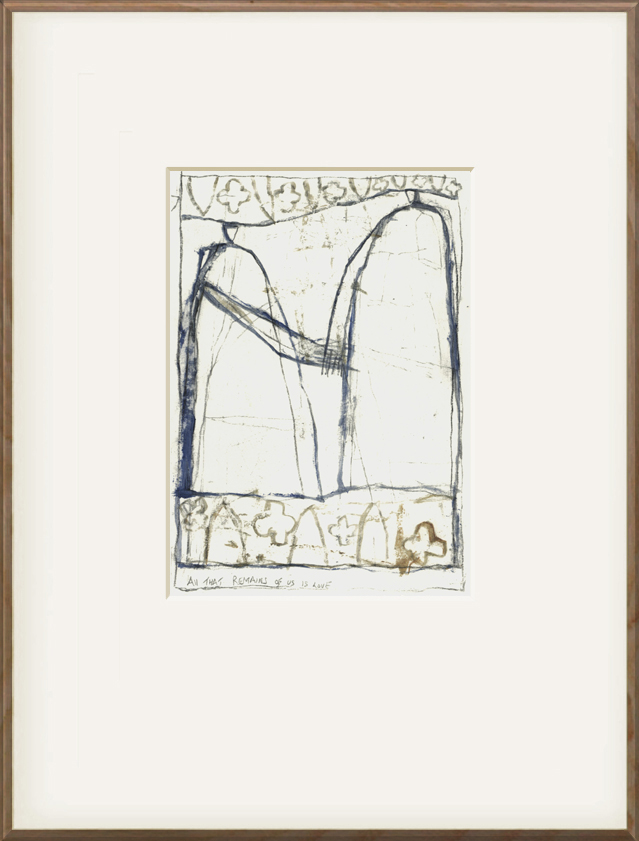
In Chichester cathedral there is a tomb for a notable medieval couple. The inscriptions and faces of the two effigies have faded but the couple are still affectionately holding hands. The tomb inspired Philip Larkin to write his poem 'An Arundel Tomb'. The last line reads...'What will survive of us is love' which when read out of context, suggests love rather than name, status, ego etc endures beyond the grave. Whether Larkin intended this interpretation is unlikely but for me the combination of the last line of the poem and the faded inscriptions on the tomb is a wonderful monument to how our identities fade but our actions can live on. As the Zen Buddhist monk Thich Nhat Hanh wrote.. 'My actions are my only true belongings'. ......more
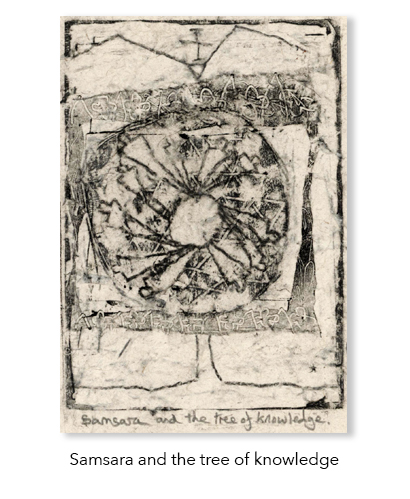
I see the Tree of Knowledge story from the bible as a parable about how our obsession with 'self' has become unbalanced with being 'selfless'. It reminds me of the cycle of reincarnation in Samsara, including one's actions and their consequences in past, present, and future. Both find liberation by looking within. ......more
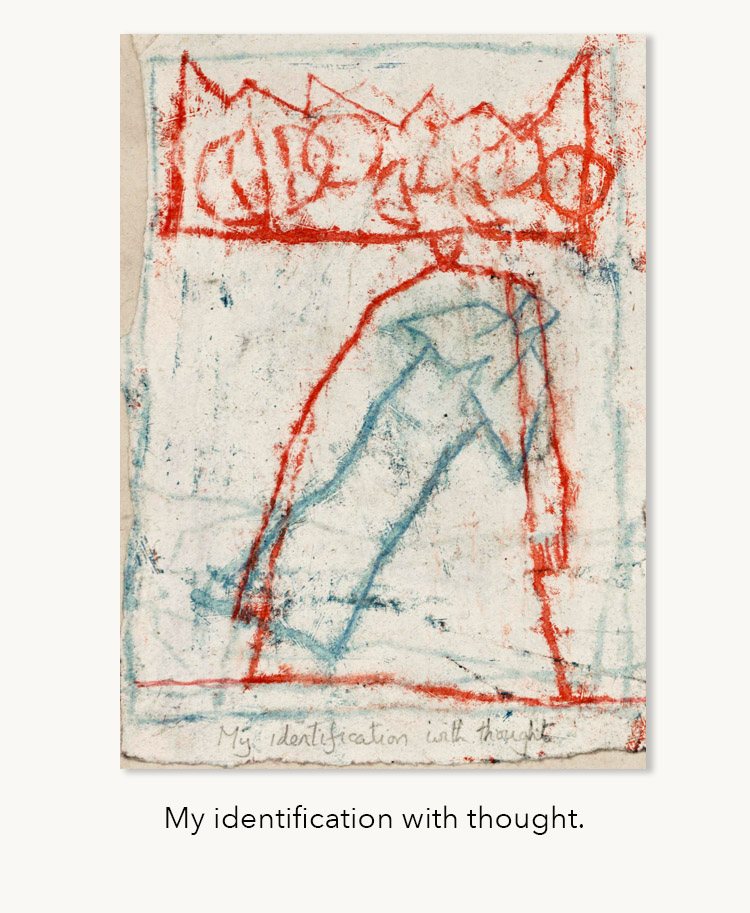
......more
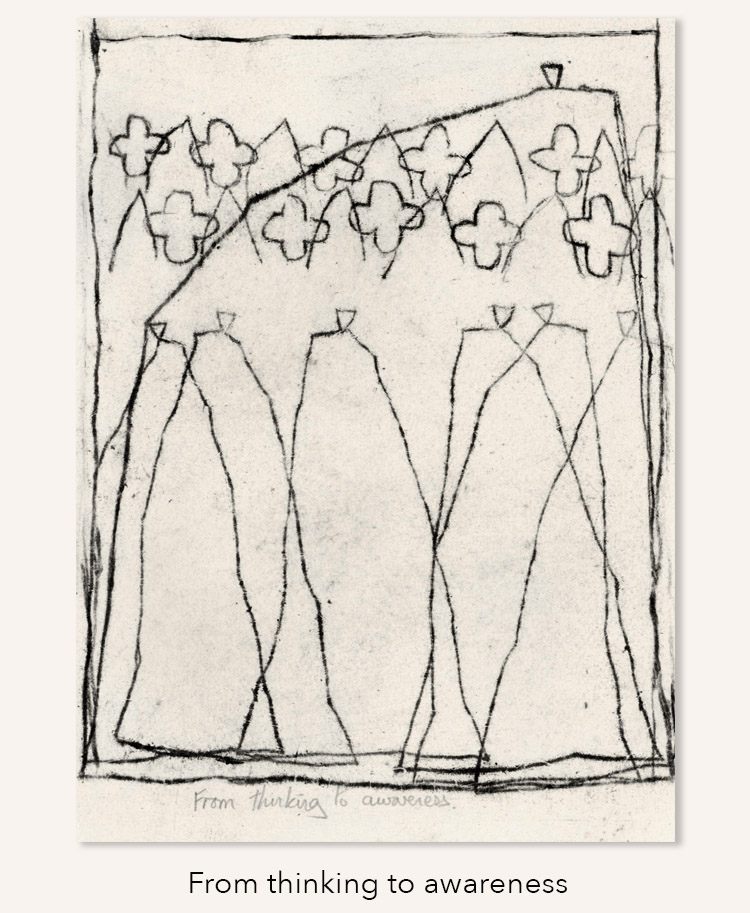
When I enter a cathedral, I always pause at the entrance to witness my feelings. I ask myself is it the architecture or the sacredness of the place that dominates my thoughts? The architecture is about the physical form in front of me. My senses place me within this world of form, creating the experience of subject and object to help me navigate through the space. My acquired knowledge helps me appreciate the physical work of building at such a large scale and the skill in creating the beauty around me. The world of form is created by my thoughts. I feel sacredness is an experience beyond the world of form. In the dictionary, it is defined as '... a connection with God'. The idea that by letting go of thoughts, we can experience a formless and infinite world called God, deeply resonates with me. It is an awareness of being, which is untroubled by thinking. The drawing explores this transition from thinking to awareness. The drawing explores the process of watching our thoughts. Being the witness behind our thoughts and entering a consciousness which is just awareness.
The Ted Talk by Donald Hoffman sparked my interest in the idea that all form is created by a universal consciousness and that the world we perceive is a fraction of reality, filtered and translated through our thoughts so that we can function. ......more
In this painting I was thinking about the freedom of 'no self' as opposed to the self awareness given to us by the serpent in the Garden of Eden. The owl has come to represent this freedom for me, because when witnessed in nature, I find all thoughts stop and I am brought fully into the present moment. ......more
I think I enjoy my problems. They reinforce my sense of self, even if they cause me suffering. They make me feel special. Just a chance thought can trigger a long and pointless dialogue in my head, where I am centre stage. Only when I drop this notion of a 'self' do I find peace. My painting depicts multiple figures in blue, perhaps different versions of me or just different people. Either way, their identity is based in thought, while the green image of the single figure, depicting stillness and universal consciousness, unites us beyond thought. ......more
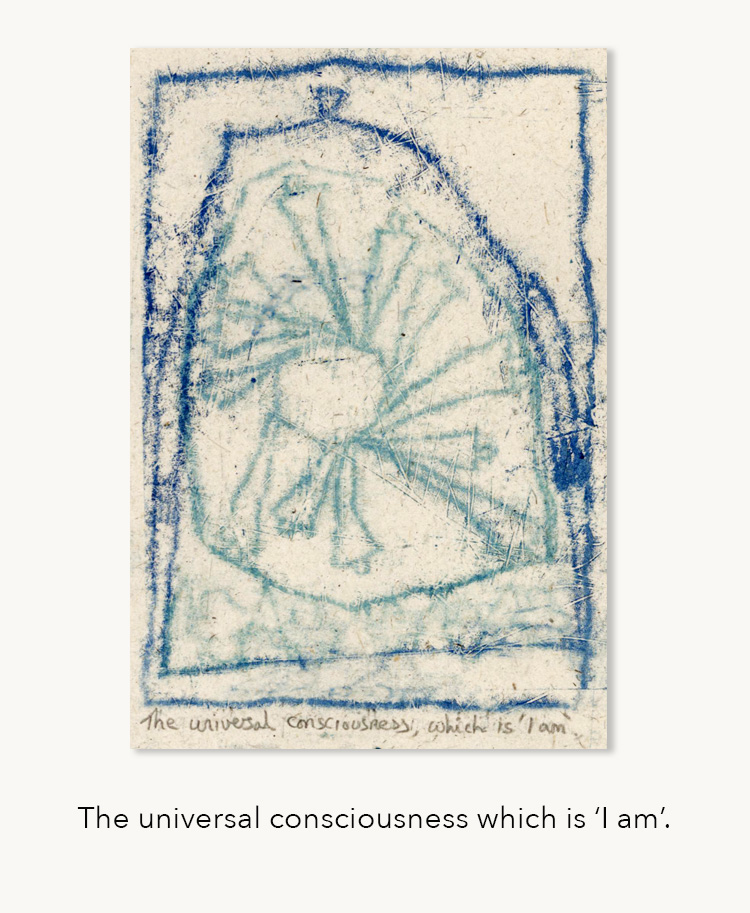
The drawing explores the formless space deep within us, which is our pure sense of self. It has no form, it is not born nor dies. It is an ever present awareness of form, which includes awareness of thoughts. It is the eternal space within which everything is perceived. It is the ‘I’ in ‘I am’, the infinite ‘I’. It is Gods own sense of self.......more
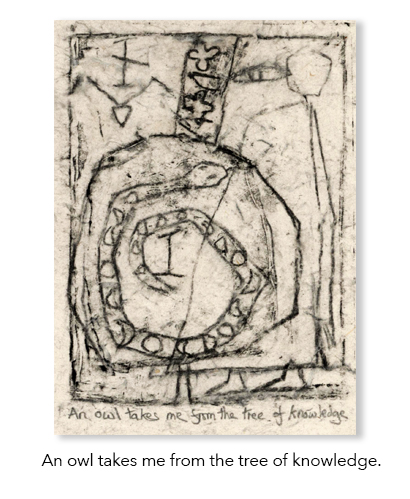
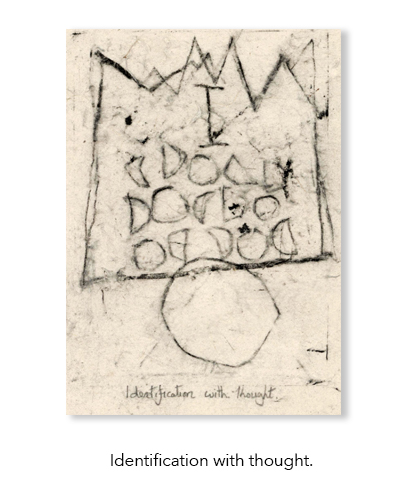
A chance encounter with wildlife brings me instantly into the present moment. Thought is left behind, replaced by awareness. In the drawing this awareness is represented with the letter 'I' crossed out. An awareness which is not burdened by labels, preconception or knowledge. I see the world as if for the first time, like a child. A magical moment that instantly lets go of the internal chatter and dualistic thinking in my mind. ......more
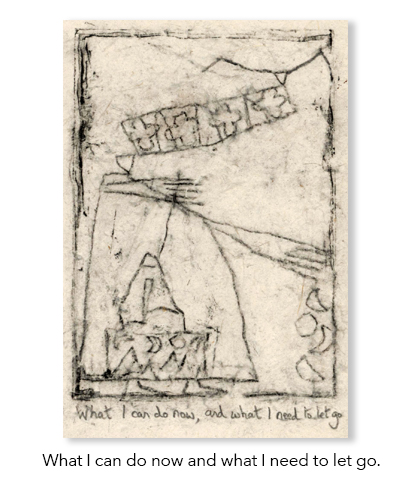
All my thoughts and worries centre around an imagined future. If I can let go of my ego (depicted as a crown) and time (symbolised by the phases of the moon), then my thoughts become calm. I feel a stillness (represented by the carvings on the side of a tomb). In this stillness, a clarity replaces the endless imagined problems. A realisation of what I can do now, and what I need to let go. ......more
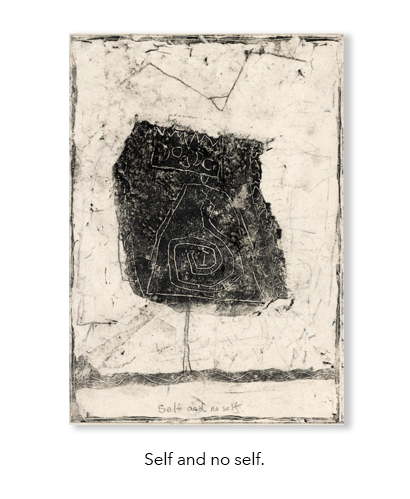
I think I enjoy my problems. They reinforce my sense of self, even if they cause me suffering. They make me feel special. Just a chance thought can trigger a long and pointless dialogue in my head, where I am centre stage. Only when I drop this notion of a 'self' do I find peace.
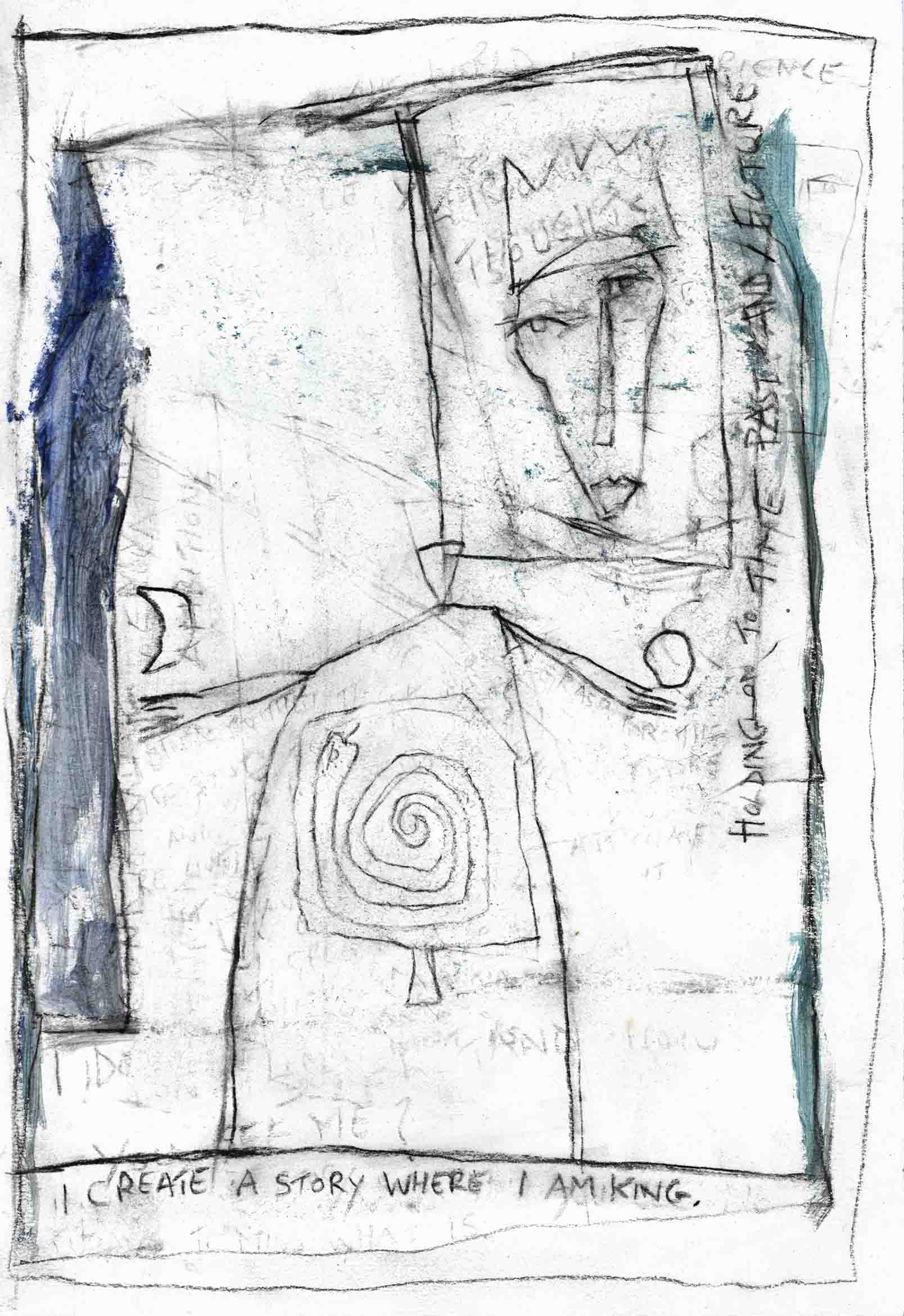
All my life I have anticipated conflict, which in reality never materialised. I rehearse possible arguments or fantasise about conversations where I can impress. The picture depicts my conscious self, with no thoughts and fully present, witnessing my unconscious self. The serpent has given me an ego and identity which feeds off thoughts of past and future. ......more
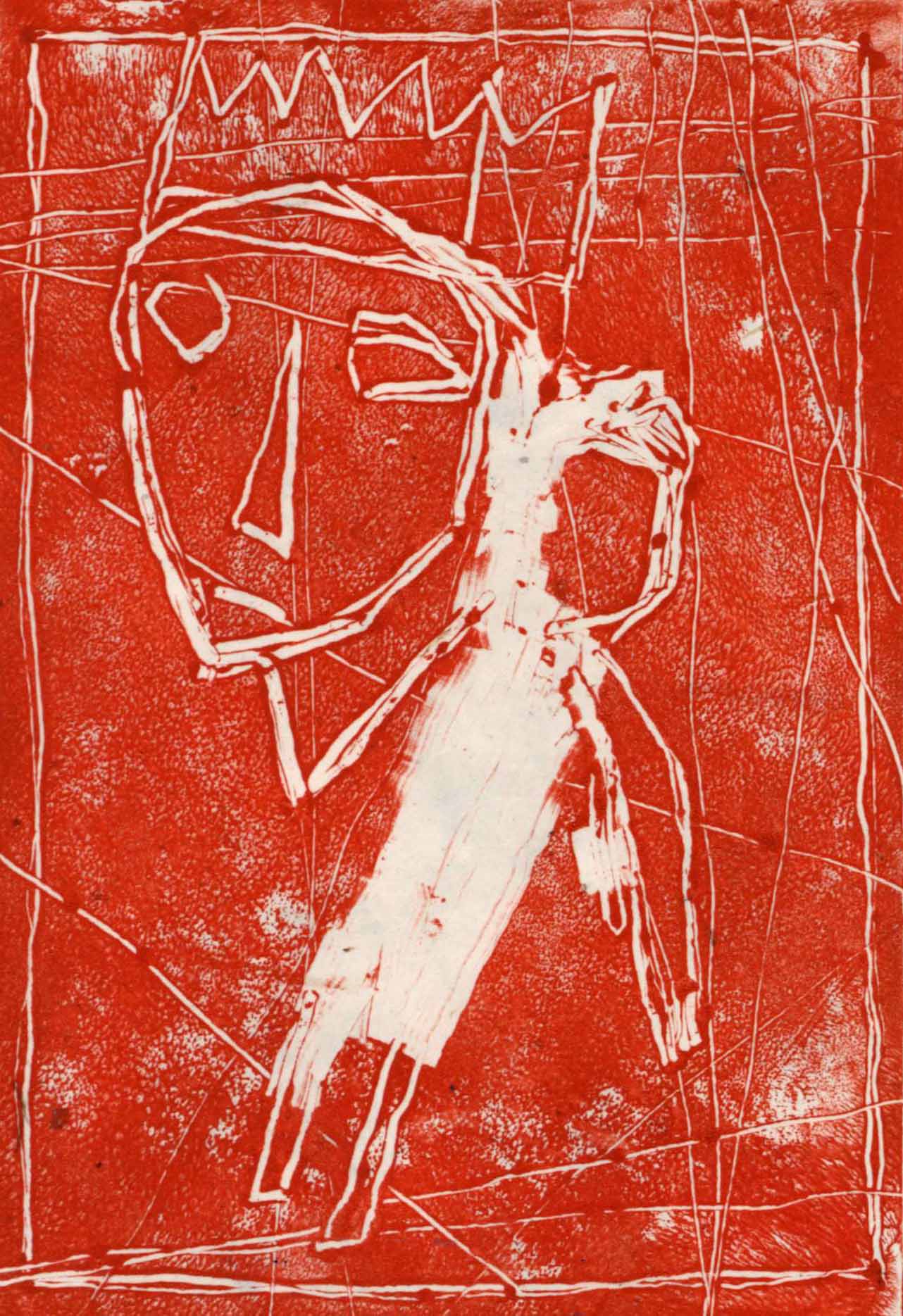
I think having an illusion of self is essential for us to be able to navigate the world and survive. However, with a lack of self awareness, we allow the illusion of self to dominate our lives. Dualistic thinking takes over. My world becomes burdened with comparison, differentiation and separation and I begin to spend too much time creating a self image for people to acknowledge. I am beginning to realise that this image I create, is in fact, only seen by me. ......more
I was thinking about the Tree of knowledge of good and evil when drawing this picture. When challenged by God, Adam blamed Eve and Eve blamed the serpent. With this act of not taking responsibility for their actions, driven by a new dualistic and egoic sense of self, suffering was born. This dualistic thinking, which is largely argumentative, has been dominant in my life. Perhaps fashioned by society, culture and education but ultimately fuelled by a misguided sense of self. ......more
Follow on Facebook Instagram Profile
Purchase Greeting Cards | Paintings and drawings for sale.
All copyright reserved